


R&D across health areas | Tuberculosis
R&D for Tuberculosis
How new tools can transform the fight
Tuberculosis (TB) has burdened humanity for thousands of years. Today, it is the world’s leading infectious disease killer: 10.7 million people fell ill from TB and 1.23 million died in 2024 alone. Additionally, growing resistance to available drugs is making the disease more deadly and difficult to treat.
To end the epidemic, new technologies to prevent, treat, and diagnose TB are urgently needed, including a new vaccine with better protective efficacy, shorter and safer treatment regimens, and improved diagnostics that can detect drug resistance designed specifically for underserved populations and low-resource settings.
-
1.23 millionpeople died from TB in 2024
-
390,000 peopledeveloped MDR-TB in 2024
-
$16.7 trillioncost of MDR-TB to global economy by 2050
 Research
successes
Research
successes
Technologies have transformed the fight against TB:
- Bedaquiline, a drug for multidrug-resistant TB (MDR-TB) developed with NIH and USAID support, which has become the cornerstone of modern, all-oral MDR-TB regimens, was approved by the FDA in 2012. A pediatric version followed in 2020. In recent years, the World Health Organization (WHO) has recommended additional bedaquiline-based regimens that have shortened MDR-TB treatment from up to two years, when the drug was first introduced, to six to nine months today.
- The first child-friendly TB medicines, developed with USAID support, were introduced in 2016. They are appropriately dosed, dissolvable, and fruit flavored.
- Pretomanid, a drug for highly drug-resistant TB (DR-TB), developed with USAID and NIH support, was approved by FDA in 2019. Pretomanid-based regimens have dramatically improved DR-TB treatment outcomes and reduced treatment times from up to two years to six months.
- A shorter, four-month treatment regimen for drug-susceptible TB, developed with CDC and NIH support, was endorsed by WHO in 2022, marking the first major advancement in drug-susceptible treatment in nearly 50 years.
- 3HP and 1HP, short-course preventative regimens to stop latent TB from becoming active, developed with CDC and NIH support, were introduced in 2011 and 2018, respectively, making treatment more tolerable and shorter (one to three months versus six).
- Rapid confirmatory TB diagnostics, including automated molecular tests suitable for lower-level laboratories, such as Xpert and Truenat, and the first recommended near point-of-care molecular test, Pluslife Mindock MTB, which can be used in primary and community-based health care settings.
- Advances in TB screening, such as AI-powered computer-aided detection software to analyze chest X-rays and cough apps that use AI to analyze cough audio recordings.
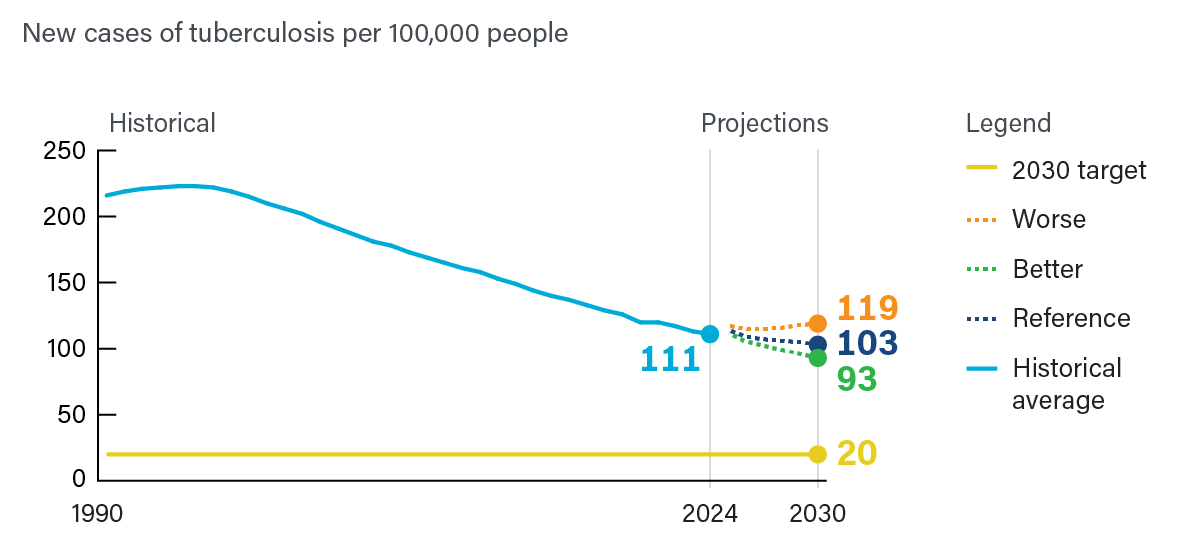
 Continued progress is possible, not inevitable
 Key missing tools
To end TB, we need new tools to detect, prevent, and treat infection, including:
- Shorter, safer, simpler, and more affordable treatment regimens with fewer side effects for active and drug-resistant TB that include both novel drugs and next-generation versions of existing drugs to improve tolerability, acceptability, adherence, and treatment outcomes and address rising drug resistance.
- Specifically dosed and formulated treatment regimens for pregnant people and children, as well as people living with HIV coinfection.
- New vaccines for prevention and treatment that are scalable, cost-effective, safe for pregnant people, and protect across ages. The current vaccine, developed in 1921, is effective at preventing some types of TB in infants, but it offers inconsistent protection in adults against pulmonary TB.
- Rapid, non-sputum-based, affordable point-of-care screening and diagnostic tools and quick, simplified drug susceptibility tests, which are suitable for use in low-resource settings and primary health care facilities. Diagnostics validated specifically for children, who are often considered only later on in research, should also be prioritized.
- New tools to monitor treatment for individuals at risk of poor treatment outcomes before, during, and after treatment to ensure treatment retention, assess response, and identify those at risk of TB relapse.
 Breakthroughs on the brink
- Twenty-two new or repurposed drugs for TB are in clinical development, including the first of a novel class of drugs to approach Phase 3 development. Ongoing research will determine how to optimally combine this next generation of new drugs to further shorten the duration and improve the efficacy and safety of TB treatment regimens while preserving the longevity of new agents and drug classes against the development of drug resistance. AI is also accelerating the discovery of new TB drug targets.
- New treatment regimens for children, including a regimen for drug-susceptible TB that could reduce treatment time from up to six months to two, which is now in Phase 3 trials supported formerly by USAID and now the State Department. NIH is also supporting early-stage clinical studies on pretomanid use in children to increase the availability of pretomanid-containing regimens for children.
- More shortened treatment regimens for TB and DR-TB composed of existing drugs are also in the pipeline, including a Phase 3 trial testing six different treatment approaches for patients with bacteriologically unconfirmed TB, or patients who have chest ray abnormalities that look like TB but cannot be confirmed with traditional sputum tests, who have no clear treatment option.
- There are 17 potential preventative and therapeutic TB vaccines in development, including a vaccine candidate, M72/AS01E, currently in Phase 3 trials, that shows promise in preventing pulmonary TB in adolescents and adults and, if proven successful, could become the first new TB vaccine in more than 100 years. Another promising vaccine MTBVAC is in Phase 2/3 development for infants, adolescents, adults, and people living with HIV.
- New approaches and strategies for TB vaccine research are invigorating the field, including research on new routes of administration, such as using inhaled, aerosolized TB vaccines and mRNA technology, as well as new models for vaccine testing, including a controlled human infection model.
- New, innovative methods to administer treatment, such as microarray patches and long-acting formulations and injectable agents, may lower the cost and burden of treatment by reducing the frequency and number of treatments that patients need. Nanomedicine is another area that could have the potential to reduce drug doses and side effects, improving treatment compliance, with one NIH-backed inhalable option in development.
- More portable and affordable near point-of-care ultrasounds, AI-powered digital stethoscopes, and biomarker-based tests are emerging as growing classes of TB screening and diagnostic tools, along with less-expensive, next-generation urine- and swab-based molecular tests, all of which could bring care closer to patients and improve diagnostics access for underserved populations.
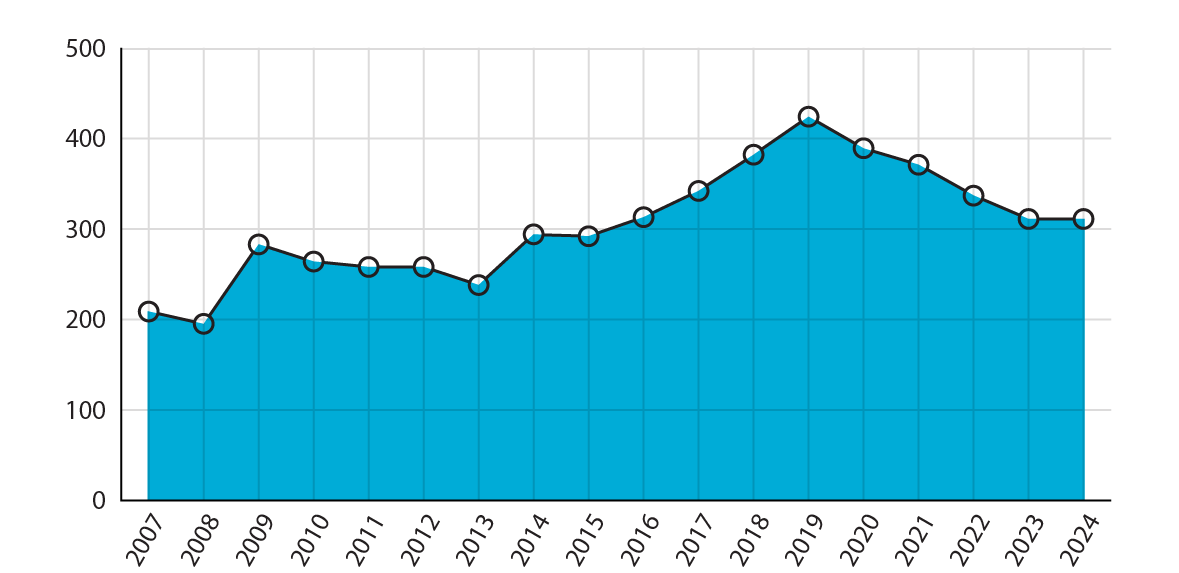
US government investment in TB R&D, 2024 US$ millions
 US government R&D efforts
The US government is leading efforts to advance research and development (R&D) to end the TB pandemic through a whole-of-government approach:
- National Institutes of Health (NIH) conducts basic and clinical research to accelerate the development of new tools to diagnose, prevent, and treat TB.
- Department of State supports the delivery and scale-up of TB products and services globally and is continuing select TB drug and diagnostic development efforts formerly led by the US Agency for International Development (USAID) following the agency's integration.
- Centers for Disease Control and Prevention (CDC) supports clinical and epidemiological research for TB through national and international partnerships, such as the TB Trials Consortium, which has supported the development and implementation of new TB technologies and significantly improved global TB treatment and prevention guidelines.
- Department of War has funded research on TB vaccines, drugs, and diagnostics through the Congressionally Directed Medical Research Programs (CDMRP) and other contracts, but to enable the former, TB must be added annually to the CDMRP list of eligible diseases.
- Food and Drug Administration (FDA), alongside approving products for use in the United States, administers the Tropical Disease Priority Review Voucher Program to incentivize investment in products for neglected diseases, including TB, and implements an expedited approval pathway for antibiotics that can apply to DR-TB products.
Introduction
10.7 million new infections, 1.23 million people died: World Health Organization. Tuberculosis. November 13, 2025. Accessed February 19, 2026. https://www.who.int/news-room/fact-sheets/detail/tuberculosis
390,000 people developed MDR-TB: World Health Organization. Global Tuberculosis Report 2025. World Health Organization; 2025. https://www.who.int/teams/global-programme-on-tuberculosis-and-lung-health/tb-reports/global-tuberculosis-report-2025
$16.7 trillion cost of MDR-TB: Zweynert A. Drug-resistant TB threatens to kill 75 million people by 2050, cost $16.7 trillion. Reuters. March 23, 2015. Accessed February 19, 2026. https://www.reuters.com/article/us-health-tuberculosis-economy/drug-resistant-tb-threatens-to-kill-75-million-people-by-2050-cost-16-7-trillion-idUSKBN0MK00520150324/
Research successes
Bedaquiline: Thomas K. FDA approves drug for resistant tuberculosis. The New York Times. December 31, 2012. Accessed February 19, 2026. https://www.nytimes.com/2013/01/01/business/fda-approves-new-tuberculosis-drug.html
Bedaquiline, pediatric version: US FDA approves new pediatric formulation of SIRTURO® (bedaquiline) as part of combination therapy to treat children with pulmonary multidrug-resistant tuberculosis. Press release. Johnson & Johnson; May 27, 2020. https://www.jnj.com/media-center/press-releases/u-s-fda-approves-new-pediatric-formulation-of-sirturoo-bedaquiline-as-part-of-combination-therapy-to-treat-children-with-pulmonary-multidrug-resistant-tuberculosis
Additional shortened regimens: Cullinan K. WHO recommends three shorter, oral treatments for drug-resistant TB. Health Policy Watch. August 22, 2024. Accessed February 19, 2026. https://healthpolicy-watch.news/who-recommends-three-shorter-oral-treatments-for-drug-resistant-tb/
Child-friendly TB medicines: TB Alliance. Child-friendly medicines. Accessed February 19, 2026. https://www.tballiance.org/child-friendly-medicines
Pretomanid: TB Alliance. Pretomanid and the BPaL regimen. Accessed February 19, 2026. https://www.tballiance.org/pretomanid-bpal-regimen/
Shorter, four-month treatment regimen:
Mckenna L. Pipeline Report 2023: Tuberculosis Treatment. Treatment Action Group; 2023. https://www.treatmentactiongroup.org/wp-content/uploads/2024/03/pipeline_TB_Treatment_2023_final.pdf
World Health Organization. Major improvements in quality of life for people with drug-susceptible TB expected following updates in TB treatment regimens. World Health Organization. May 24, 2022. Accessed February 19, 2026. https://www.who.int/news/item/24-05-2022-major-improvements-in-quality-of-life-for-people-with-drug-susceptible-tb-expected-following--updates-in-tb-treatment-regimens
3HP and 1HP, short-course preventative regimens: Mckenna L. Pipeline Report 2023: Tuberculosis Treatment. Treatment Action Group; 2023. https://www.treatmentactiongroup.org/wp-content/uploads/2024/03/pipeline_TB_Treatment_2023_final.pdf
Diagnostic innovations: Vachaspath TD. Pipeline Report 2025: Tuberculosis Diagnostics. Treatment Action Group; 2025. https://www.treatmentactiongroup.org/wp-content/uploads/2025/11/2025_pipeline_TB_Diagnostics_final.pdf
Diagnostic innovations, near point-of-care molecular test recommendation: World Health Organization (WHO). WHO recommends near point-of-care tests, tongue swabs, and sputum pooling for TB diagnosis. World Health Organization. March 9, 2026. Accessed February 19, 2026. https://www.who.int/news/item/09-03-2026-who-recommends-near-point-of-care-tests--tongue-swabs--and-sputum-pooling-for-tb-diagnosis
Advances in TB screening: Vachaspath TD. Pipeline Report 2025: Tuberculosis Diagnostics. Treatment Action Group; 2025. https://www.treatmentactiongroup.org/wp-content/uploads/2025/11/2025_pipeline_TB_Diagnostics_final.pdf
Advances in TB screening, computer-aided TB diagnostic software products: World Health Organization (WHO). WHO approves six software products for computer-aided detection of TB on chest X-ray. World Health Organization. June 11, 2025. Accessed February 19, 2026. https://www.who.int/news/item/11-06-2025-who-approves-six-software-products-for-computer-aided-detection-of-tb-on-chest-x-ray
Continued progress is possible, not inevitable
Gates Foundation. Goalkeepers 2025 Report. We can't stop at almost. Gates Foundation; 2025. https://www.gatesfoundation.org/goalkeepers/report/2025-report/
Key missing tools
World Health Organization. Global Tuberculosis Report 2025. World Health Organization; 2025. https://www.who.int/teams/global-programme-on-tuberculosis-and-lung-health/tb-reports/global-tuberculosis-report-2025
Treatment regimens:
TB Alliance. Scientific vision. Accessed February 19, 2026. https://www.tballiance.org/rd-scientific-vision/
TB Alliance. Inadequate treatment. Accessed February 19, 2026. https://www.tballiance.org/why-new-tb-drugs-inadequate-treatment/
Diagnostics:
Vachaspath TD. Pipeline Report 2025: Tuberculosis Diagnostics. Treatment Action Group; 2025. https://www.treatmentactiongroup.org/wp-content/uploads/2025/11/2025_pipeline_TB_Diagnostics_final.pdf
World Health Organization. Target Product Profile for Tuberculosis Diagnosis and Detection of Drug Resistance. World Health Organization; 2024. https://www.who.int/publications/i/item/9789240097698
Treatment monitoring:
Vachaspath TD. Pipeline Report 2025: Tuberculosis Diagnostics. Treatment Action Group; 2025. https://www.treatmentactiongroup.org/wp-content/uploads/2025/11/2025_pipeline_TB_Diagnostics_final.pdf
Breakthrough on the brink
New or repurposed drugs: McKenna L. Pipeline Report 2025: Tuberculosis Treatment. Treatment Action Group; 2025. https://www.treatmentactiongroup.org/wp-content/uploads/2025/08/pipeline_TB_Treatment_2025_final.pdf
New or repurposed drugs, AI drug discovery: Aguilera M. AI accelerates search for new tuberculosis drug targets. MedicalXpress. February 6, 2026. Accessed February 19, 2026. https://medicalxpress.com/news/2025-02-ai-tuberculosis-drug.html
TB treatment regimens for children: McKenna L. Pipeline Report 2025: Tuberculosis Treatment. Treatment Action Group; 2025. https://www.treatmentactiongroup.org/wp-content/uploads/2025/08/pipeline_TB_Treatment_2025_final.pdf
TB treatment regimens for children, regimen for drug-susceptible TB: SMART4TB Consortium. SMILE-TB Trial: Shortened Regimen for Drug-Susceptible TB in Children. SMART4TB Consortium; 2025. https://tbcenter.jhu.edu/wp-content/uploads/2025/12/SMILE-TB-Study.pdf
TB treatment regimens for children, pretomanid: Promising new data on pediatric use of pretomanid in children with drug-resistant tuberculosis presented at 2025 Union Conference. Press Release. TB Alliance; November 19, 2025. https://www.tballiance.org/promising-new-data-on-pediatric-use-of-pretomanid-in-children-with-drug-resistant-tuberculosis-presented-at-2025-union-conference/
Shortened regimens of existing drugs, including for unconfirmed TB:
McKenna L. Pipeline Report 2025: Tuberculosis Treatment. Treatment Action Group; 2025. https://www.treatmentactiongroup.org/wp-content/uploads/2025/08/pipeline_TB_Treatment_2025_final.pdf
Good Clinical Practice Network. RADIO-TB trial: Finding the right treatment length for TB detected by chest X-Ray. September 1, 2025. Accessed February 19, 2026. https://ichgcp.net/clinical-trials-registry/551937-optimal-treatment-duration-for-radiographically-apparent-bacteriologically-unconfirmed-tb-identified-through-active-case-finding-radio-tb-trial
17 vaccines in development, including M72/AS01E:
Stop TB Partnership Working Group on New TB Vaccines. TB vaccine clinical pipeline. Updated January 7, 2026. Accessed February 19, 2026. https://newtbvaccines.org/tb-vaccine-pipeline/clinical-phase/
Velayutham B. Overview of the tuberculosis vaccine development landscape. Indian Journal of Tuberculosis. 2025;72(4):517-520. https://doi.org/10.1016/j.ijtb.2025.01.004
17 vaccines in development, MTBVAC: IAVI and Biofabri/Zendal announce first vaccinations in the IMAGINE clinical trial, a large-scale safety and efficacy trial of the tuberculosis vaccine candidate MTBVAC. Press Release. IAVI and Biofabri; February 26, 2025. https://www.iavi.org/press-release/iavi-and-biofabri-zendal-announce-first-vaccinations-in-the-imagine-clinical-trial-a-large-scale-safety-and-efficacy-trial-of-the-tuberculosis-vaccine-candidate-mtbvac/
New approaches and strategies for TB vaccine research; inhaled, aerosolized TB vaccine: Stop TB Partnership Working Group on New TB Vaccines. Ad5-105K. Updated December 21, 2025. Accessed February 19, 2026. https://newtbvaccines.org/vaccine/ad5-105k/
New approaches and strategies for TB vaccine research, mRNA technology: Stop TB Partnership Working Group on New TB Vaccines. TB vaccine preclinical pipeline. Updated February 9, 2026. Accessed February 19, 2026. https://newtbvaccines.org/tb-vaccine-pipeline/preclinical-stage/
New approaches and strategies for TB vaccine research, controlled human infection model: Velayutham B. Overview of the tuberculosis vaccine development landscape. Indian Journal of Tuberculosis. 2025;72(4):517-520. https://doi.org/10.1016/j.ijtb.2025.01.004
Innovative treatment methods, microarray patches: Rey-Sanchez MJ, Miranda-Muñoz KA, Morton LD, Rodriguez-Rivera GJ, Castilla-Casadiego DA. Lyophilized drug reservoir-integrated hydrogel-forming microarray patches for transdermal delivery of isoniazid and pyridoxine hydrochloride as a strategy to treat latent tuberculosis. Annals of Translational Medicine. 2025;13(5):51. doi:10.21037/atm-25-120
Innovative treatment methods, long-acting formulations: McKenna L. Pipeline Report 2025: Tuberculosis Treatment. Treatment Action Group; 2025. https://www.treatmentactiongroup.org/wp-content/uploads/2025/08/pipeline_TB_Treatment_2025_final.pdf
Innovative treatment methods, long-acting injectable agents: Medincell and iM4TB initiate development of a long-acting injectable version of Macozinone, a promising investigational tuberculosis treatment. Press release. Medincell and iM4TB; April 22, 2025. https://www.medincell.com/wp-content/uploads/2025/04/MDC_IM4TB_PRmap_22042025_EN_vf.pdf
Innovative treatment methods, nanomedicine:
Wits University. Breathing new life into tuberculosis treatment with inhalable nanomedicine. Phys.org. November 4, 2025. Accessed February 19, 2026. https://phys.org/news/2025-11-life-tuberculosis-treatment-inhalable-nanomedicine.html
University at Buffalo. New inhalable tuberculosis treatment could replace months of daily pills. SciTechDaily. February 18, 2026. Accessed February 19, 2026. https://scitechdaily.com/new-inhalable-tuberculosis-treatment-could-replace-months-of-daily-pills/
Diagnostic and screening tools:
Vachaspath TD. Pipeline Report 2025: Tuberculosis Diagnostics. Treatment Action Group; 2025. https://www.treatmentactiongroup.org/wp-content/uploads/2025/11/2025_pipeline_TB_Diagnostics_final.pdf
Staff reporter. Monod Bio wins $1.5M Gates Foundation grant for urine-based tuberculosis Dx. 360Dx. September 3, 2025. Accessed February 19, 2026. https://www.360dx.com/molecular-diagnostics/monod-bio-wins-15m-gates-foundation-grant-urine-based-tuberculosis-dx
US government investment in TB R&D
G-FINDER data portal. Policy Cures Research; 2026. Accessed February 2, 2026. https://gfinderdata.policycuresresearch.org/
US government R&D efforts
All: KFF. The US government and Global Tuberculosis Efforts. KFF; 2024. https://www.kff.org/global-health-policy/fact-sheet/the-u-s-government-and-global-tuberculosis-efforts/
All: Kaiser Family Foundation. The U.S. government and Global Tuberculosis Efforts. Accessed July 17, 2024. https://www.kff.org/global-health-policy/fact-sheet/the-u-s-government-and-global-tuberculosis-efforts/
Centers for Disease Control and Prevention, TB Trials Consortium: Centers for Disease Control and Prevention. Tuberculosis Trials Consortium. March 1, 2024. Accessed March 2, 2026. https://www.cdc.gov/tb/research/tbtc.html
State Department:
KFF. KFF tracker: America first MOU bilateral global health agreements. KFF February 9, 2026. Accessed February 19, 2026. https://www.kff.org/global-health-policy/kff-tracker-america-first-mou-bilateral-global-health-agreements/
According to conversations with TB drug developers formerly receiving USAID support.
Department of War: Defense Technical Information Center. https://dtic.dimensions.ai/discover/publication. Accessed March 2, 2026.
Food and Drug Administration, Tropical Disease Priority Review Voucher: US Food and Drug Administration. Tropical Disease Priority Review Voucher Program. Accessed March 2, 2026. https://www.fda.gov/about-fda/center-drug-evaluation-and-research-cder/tropical-disease-priority-review-voucher-program
Food and Drug Administration, expedited approval pathway: US Food and Drug Administration. Limited Population Pathway for Antibacterial and Antifungal Drugs – the LPAD Pathway. Accessed March 2, 2026. https://www.fda.gov/drugs/development-resources/limited-population-pathway-antibacterial-and-antifungal-drugs-lpad-pathway